
How to Search the Orange County Court Docket
Start with the statewide North Carolina eCourts Portal. Its Smart Search tool opens the public view of a case: Case Summary information, party and assignment details, Case Events, hearings, dispositions, and applicable financial information. You can search by name, complete record number, or citation number. Pick Orange County in the Location box first. Otherwise a statewide name match may not be your case at all. Remember, the Portal is a convenient public view, not the official court record.
Check the Orange location, case type, party role, and record number before trusting any entry. Need a courtroom or a hearing time right now? Use Search Hearings instead. Older files, document images, certified copies, and restricted matters all belong with the Orange Clerk of Superior Court. That split keeps a broad name hit from passing as the real Orange County case.
- Open the eCourts Portal and choose Smart Search.
- Select Orange County as the location filter.
- Search by party name, citation number, or a complete record number when available.
- Check case type, location, parties, and the chronological Case Summary before relying on an entry.
- Use Search Hearings and the local calendar to confirm a pending setting, then ask the clerk for any official copy.
Note: A missing public Portal result usually means it is time to recheck the number, spelling, county, and case type before asking a clerk terminal or the paper file.
Orange County Court Docket Portal
Orange County joined eCourts in April 2024. That shift changed where a docket search begins. There is no Orange-only vendor page. Every Orange County court docket search now runs through a statewide Enterprise Justice system, also called Odyssey. The Judicial Branch confirms all 100 counties were on it by October 2025. Orange sits inside that one public product as a selected location, and the Orange Clerk of Superior Court still keeps the local record.
The Judicial Branch eCourts page lays out the statewide rollout and how the Portal works. That official page shows why one interface can pull up Orange cases and cases from anywhere else in North Carolina. The county filter still matters every single time.
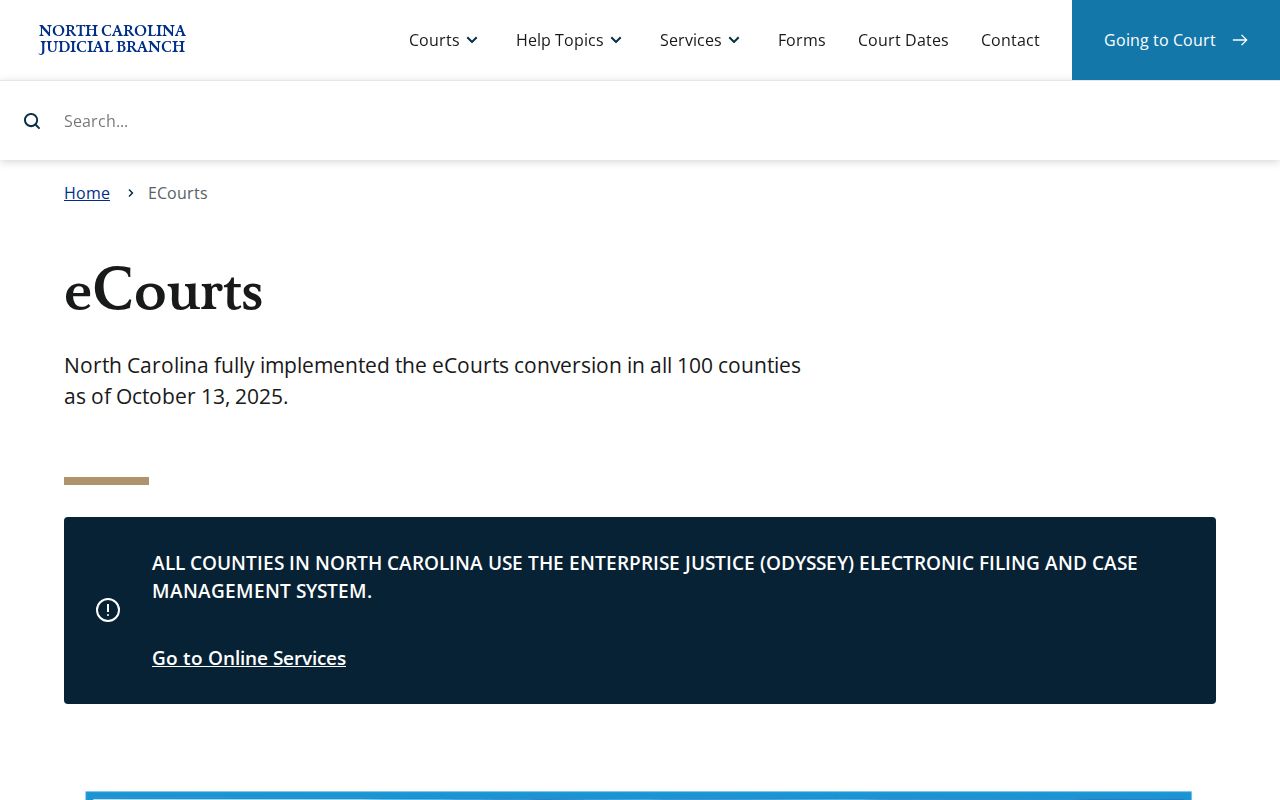
The Portal gives access, not custody. It answers a quick status or courtroom question. The Clerk of Superior Court holds the original county record, handles file access, and issues certifications.
What a Court Docket Shows
North Carolina names its detailed public timeline a Case Summary or Register of Actions. The dated entries within it are Case Events. That wording fits Orange County better than any assumption of a fixed local docket-sheet format. Around the timeline, the Portal may show more. Case information can appear, along with assignment information, parties, attorneys, hearings, dispositions, and applicable financial information. Civil, family, probate, and mental-health cases can also carry causes-of-action information. That applies where it is public.
A Case Event proves one thing: a procedural step was recorded. It does not promise a downloadable filing, a certified order, or a full transcript. Read the events next to the current hearing listing. That way a past appearance is never confused with a future setting.
| Record number | The court identifier used to locate and distinguish an Orange County case. |
|---|---|
| Case information | Public case type, status, and location or assignment context. |
| Party information | Publicly available parties and, where shown, attorney information. |
| Case Events | The dated procedural timeline, including filings, hearings, orders, or outcomes as displayed. |
| Hearings | Current or listed setting details that should be checked against Search Hearings and local calendars. |
| Disposition | The result or status field described by the Portal, not a substitute for a clerk-issued judgment. |
Orange County Court Docket Terms
The Portal has its own vocabulary. Using it makes any Orange County court docket easier to read. Nothing beats the record number as a match key. The current Enterprise Justice training format pairs a two-digit year with a letter case type, a six-digit sequence, and a three-digit county identifier, as in the state training illustration 21CR000003-910. That illustration is not an Orange case, and older records may not follow the Portal-era display at all.
Traffic matters can also be pulled up by citation number under the published search instructions. Want a partial record-number search? Enter at least four characters and add an asterisk. Name searching carries its own wildcard rules, so narrow a broad name result before calling it the right Orange County court docket.
- Case Summary / Register of Actions
- The Portal’s chronological public overview of case activity.
- Case Event
- A dated filing, hearing, order, or other procedural occurrence in the timeline.
- Hearing / setting
- A scheduled court event whose live location and time are checked through Search Hearings.
- Disposition
- The recorded outcome or status result shown in the Case Summary.
Which Courts Keep Dockets
Orange County sits in Superior Court District 18 and District Court District 18. One Clerk of Superior Court maintains the county records for both trial divisions. So the routing question is never which town court has the file. It is the case type and trial level. The statewide Portal can filter by case category. The local clerk stays the in-person channel for files and certification.
Superior Court takes felony criminal cases, civil claims above $25,000, and appeals from district-court misdemeanors or infractions. District Court handles misdemeanors, traffic and infractions, family matters, juvenile matters, small claims. Lower-level civil matters within its jurisdiction belong there too. Estates run through the Clerk of Superior Court instead. So do many special proceedings.
| Court or office | Docket covers | Where to search |
|---|---|---|
| Superior Court | Felonies, civil cases over $25,000, and district-court misdemeanor or infraction appeals. | eCourts Portal, local calendars, Orange Clerk, and the trial coordinator for settings. |
| District Court | Misdemeanors, traffic, family, juvenile, small claims, and qualifying civil cases. | eCourts Portal, Search Hearings, local calendars, and Orange Clerk. |
| Clerk special proceedings and estates | Estates, guardianship or incompetency, foreclosures, partitions, and other clerk-administered matters. | Portal category filter, then the Orange Clerk file and appointment channel. |
Orange County Court Docket Divisions
Knowing the split between Superior Court and District Court sharpens any Orange County court docket search. Felonies travel the Superior Court route. A traffic citation or a misdemeanor stays in District Court. So does an estate or special proceeding. It may go through the clerk. One unified office still keeps the county indexes and files. A civil claim over $25,000, by contrast, belongs in Superior Court.
Superior Court jurisdiction sets out one side of the line. The state's District Court overview does the same. Together they give the formal division of labor. Orange County has no county court-at-law, justice of the peace, or municipal court system. A citation written in a city moves into the District Court and Clerk chain.
Note: A courthouse name does not create a docket jurisdiction. Take Chapel Hill. Courthouse access there does not mean a Chapel Hill municipal court record system exists.
Finding Court Dates and Settings
Need a court date for an Orange County case? The eCourts Portal handles that through its Search Hearings tool. You can look up a setting by case number, party name, business, attorney, bar number, judicial officer, or courtroom. Smart Search adds the Case Summary background. For a local layer, Orange County posts Local Administrative Schedules. Those cover civil and criminal calendar links, calendar-call materials, administrative dates, and tentative court assignments.
Still stuck on a Superior Court setting? Call the Superior Court Trial Court Coordinator at 919-644-4747. The Clerk answers at 919-644-4500, and District Court Judges are listed at 919-644-4646. Online docket information sometimes runs old, restricted, or thin. A public clerk terminal or file inspection still works. The Orange County court calendar page walks through the full confirmation chain.
Orange County Court Docket Calendar Calls
Orange County civil scheduling has a local rule worth knowing. The Civil Non-Family Calendar Call starts at 11:00 a.m. The Civil Calendar Call begins at 9:30 a.m. You may attend in person or through the posted Webex courtroom link. The local instruction asks for a notice or calendar request plus the filing fee. That must arrive two weeks ahead of the calendar call you choose.
Before the call, check the draft calendar-call docket. If a timely notice is missing, report it. Pick three acceptable dates, since availability shifts and slots fill. Hearing dates are handed out at calendar call itself. Treat a tentative assignment as tentative. A confirmed date comes from the latest Portal hearing entry, the current calendar, or a call to the coordinator or clerk. Skip the old notice.
The Judicial Branch locations directory gives the statewide official context. Orange's own calendaring instructions spell out the local procedure in full.
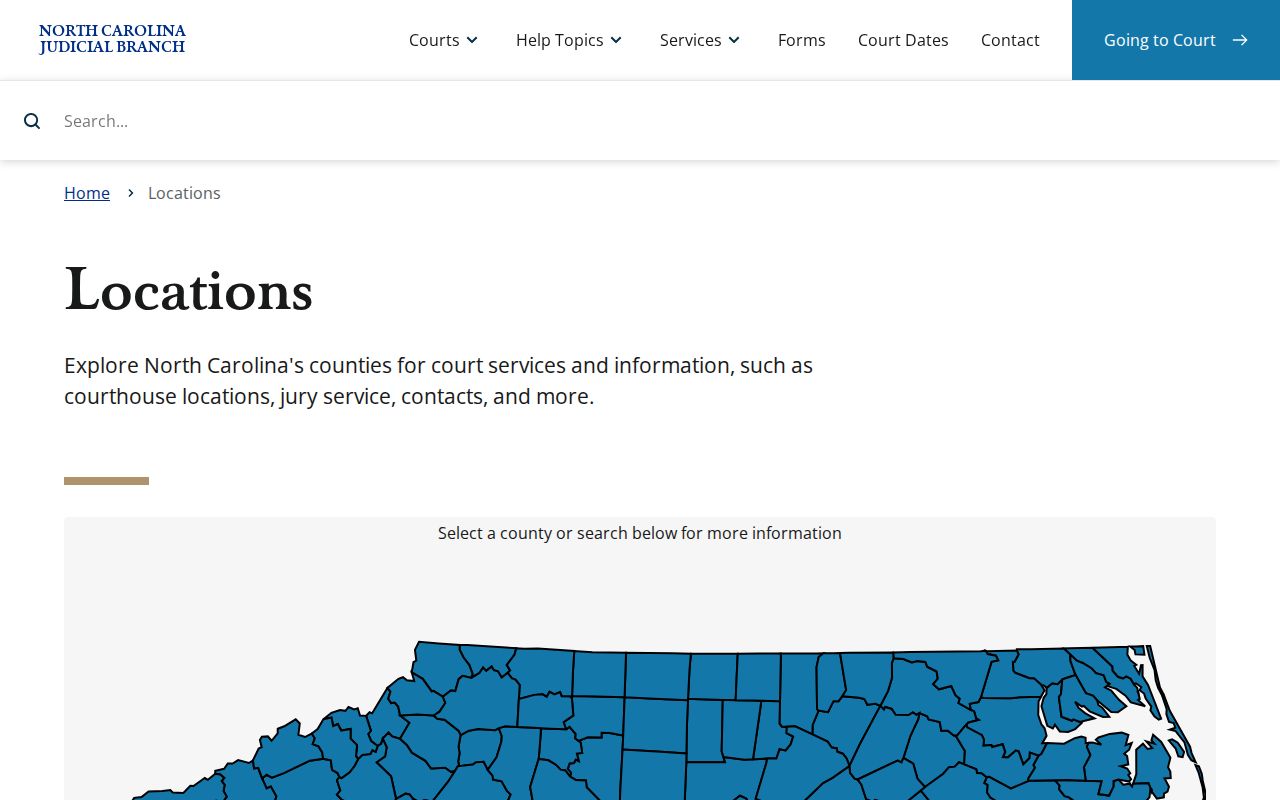
Search Hearings shows where and when a setting appears on the docket. A calendar call is how Orange County assigns certain civil dates.
Public Access to Dockets
Public access to Orange County court records runs through two doors. The Portal carries what it carries. The Clerk of Superior Court handles the rest: public files, ordinary copies, certified copies, and answers about any restriction. Under G.S. 7A-109, the clerk must keep records, files, dockets, and indexes open for inspection during regular office hours unless law says otherwise. Note the limit, though. The statute promises inspection, not a guarantee that every filed image or confidential case shows up online.
State court-records instructions put public self-service terminals in every clerk office, and they direct file inspection to the clerk in the county where the case sits. Sensitive identifiers can be redacted. Juvenile, sealed, confidential, and expunged matters follow separate rules. Registering for the public Portal grants no extra rights to restricted records.
Key Rules:
N.C.G.S. § 7A-109 requires clerk-maintained dockets, files, records, and indexes, subject to lawful access limits.
N.C.G.S. § 132-1 defines North Carolina public records, while specific confidentiality laws and orders still apply.
N.C.G.S. § 132-1.10 permits removal of listed sensitive identifiers from court images and copies.
N.C.G.S. § 15A-151 explains the special handling of criminal records after expunction.
Orange County Court Docket Limits
A Portal timeline and an official court record answer different questions. The public Case Summary may list an event, a hearing, a disposition, and financial details. The filed document is the pleading, order, or judgment behind that event. A certified copy is the clerk-issued official version. The Portal FAQ is plain. The Portal is not the official court record. That warning matters most when you need proof rather than a quick status check of the Orange County court docket.
The Judicial Branch court-records instructions cover clerk terminals, file inspection, copies, transcripts, and recording requests. An older file may send you to the Orange Clerk counter. So may a document never posted online. Transcript pricing is set by the court reporter or transcriptionist. A nonconfidential recording request uses AOC-G-114. Confidential hearing audio takes AOC-G-115 plus court permission.
The Orange County Judicial Branch page holds the official court-access detail. The online case view is one channel among several. It never stands in for the original county file.
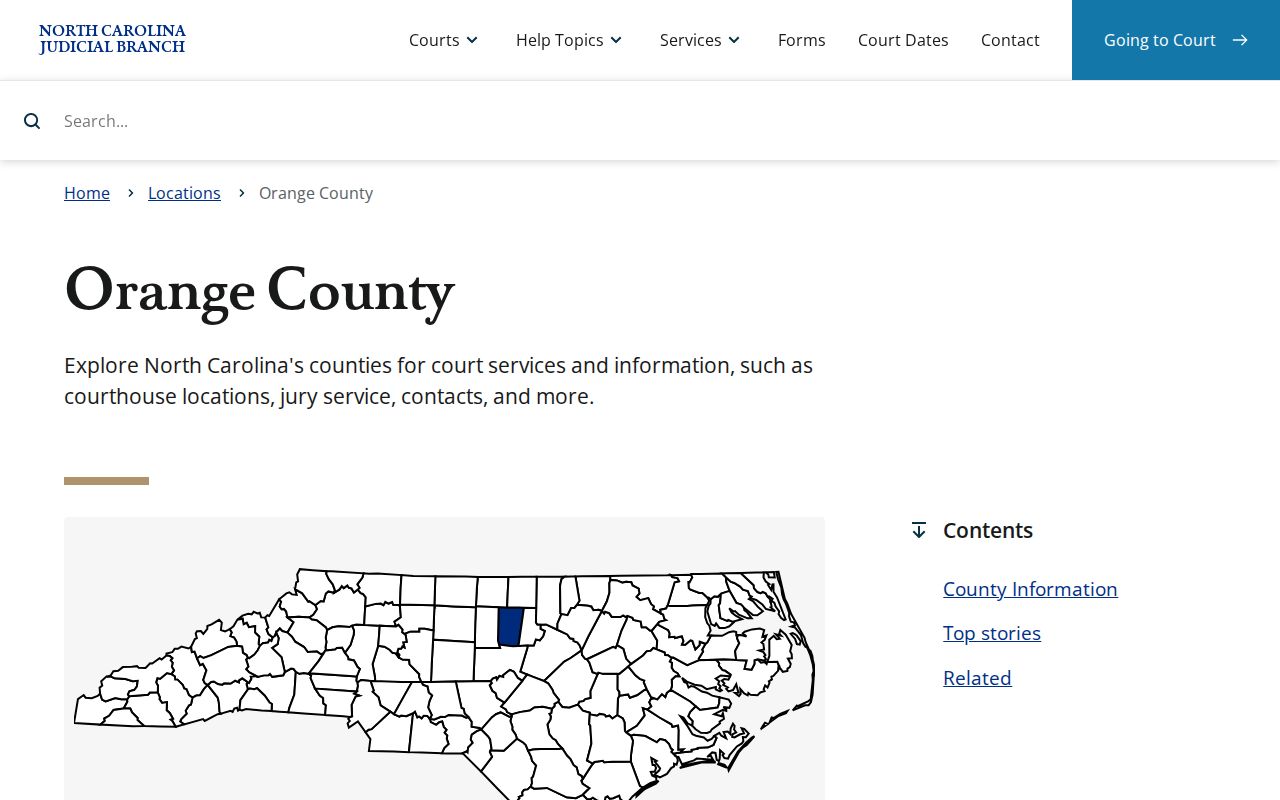
Have the case number, county, case type, and the exact document or judgment in hand before you contact the clerk.
The Clerk and Docket Records
One office keeps the whole Orange County court docket. The Clerk of Superior Court maintains records, files, dockets, and indexes for both trial divisions: Superior Court felony and civil actions, plus District Court misdemeanors, traffic, small claims, family, and juvenile matters, along with estates and special proceedings. There is no separate county-clerk database beside the state courts. Need a public terminal, a paper file, a copy, or certification? This office is the channel.
Visit the main courthouse in person when Portal detail falls short. Estates are the exception. The county asks you to call the Estates office first rather than walk in expecting an open file request. Confirm copy fees, identification, payment, mailing, and turnaround with the clerk directly, since Orange County publishes no current copy-fee schedule.
Orange County Clerk of Superior Court
Orange County Courthouse
106 E. Margaret Lane, Hillsborough, NC 27278
919-644-4500
Note: The Estates office requires an appointment; its published contact number is 919-644-4570.
Orange County Court Docket Shift
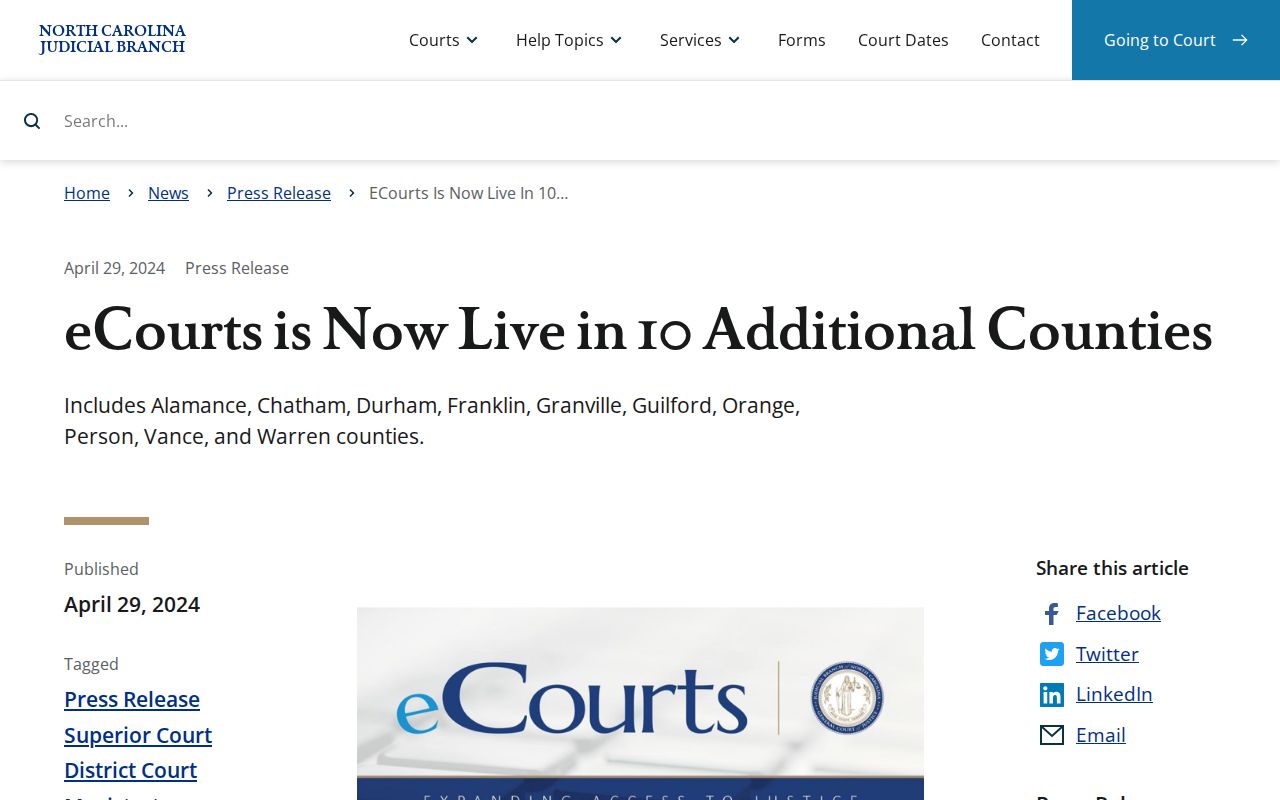
Orange County joined eCourts on April 29, 2024. That day the Judicial Branch brought the system live in Orange and nine other counties. File & Serve became the official electronic filing entry point. The Portal took over public search and payment where access permits. The change did not kill the older routes. Clerk terminals, paper filings, and certified copies still count. They belong in a complete Orange County record search.
The April 2024 announcement documents Orange's own switch. The first image marks that local transition. A second announcement confirms the statewide rollout wrapped up in 2025. That completion is why an Orange County court docket search now begins in one statewide product.
The October 2025 announcement records that later milestone.
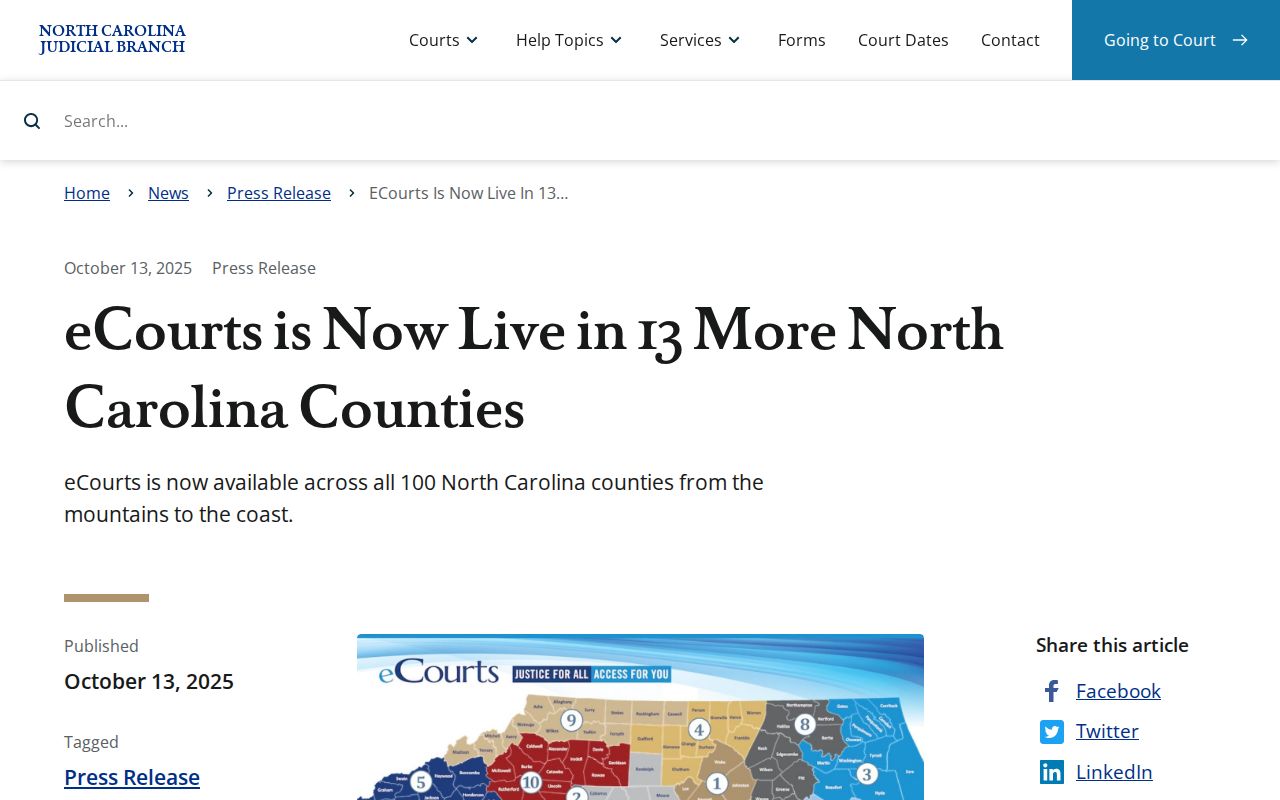
For public case status, go digital first. Turn to the local clerk whenever you need a court file, an official copy, or an explanation of limited access.
Court Dockets by City in Orange County
Orange County has four incorporated municipalities. They are Chapel Hill, Carrboro, Mebane, and Hillsborough. None of the four runs a municipal court or city docket portal of its own. A city citation still enters North Carolina District Court and the Orange Clerk's chain. So skip the town hall. The Orange County filter in the Portal is the first step that matters for a docket search. Mebane straddles Orange and Alamance Counties. Check the citation or case caption before choosing a county.
The city cards use the 2020 Census municipal totals. They route to city-specific court-access details while keeping the source of each record clear.
Chapel Hill Court Docket
61,960 in the 2020 Census. Chapel Hill has a Judicial Branch courthouse but no separate municipal docket.
Carrboro Court Docket
21,295 in the 2020 Census. Carrboro cases use Orange District Court, the Clerk, and the statewide Portal.
Mebane Court Docket
17,768 citywide in the 2020 Census. Confirm Orange or Alamance County before any Mebane search.
Hillsborough Court Docket
9,660 in the 2020 Census. Hillsborough is the county seat and the clerk’s primary courthouse city.
Orange County City Court Dockets
A Chapel Hill, Carrboro, Hillsborough, or Orange-portion Mebane citation creates no separate city court docket. Traffic tickets and infractions belong to District Court. Felonies go through Superior Court. The Orange Clerk keeps the county record itself. The eCourts Portal shows whatever public Case Summary is available. People get confused here. Court buildings and city offices simply are not separate record keepers.
Federal cases run on a different track. Use the federal court system, not the Orange County court docket. Orange-connected federal matters usually sit in the U.S. District Court for the Middle District of North Carolina, with docket access through PACER. PACER is the official federal public-record service, separate from the state Portal and Orange Clerk channels.
The first image opens the official PACER overview. The second points to the federal CM/ECF court lookup. It identifies the electronic file system each federal court runs.
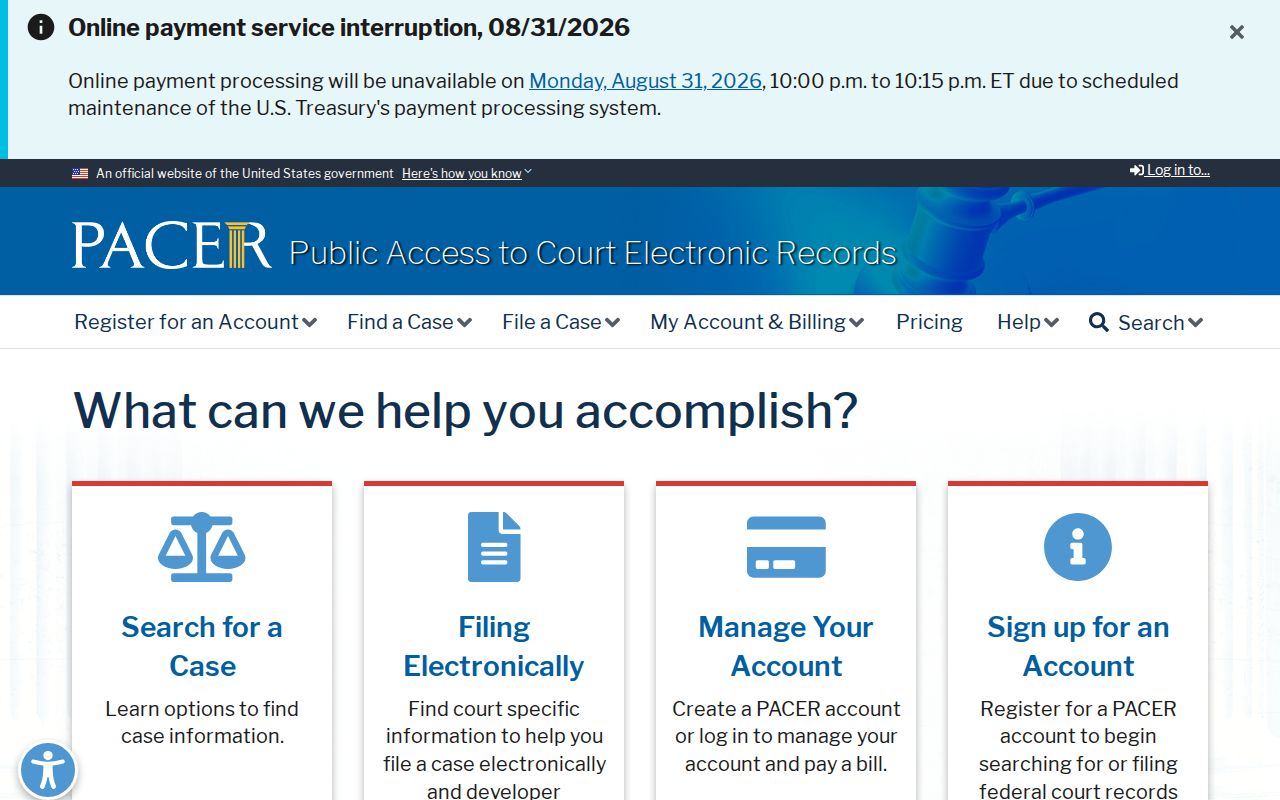
A state case stays in state court. An Orange County event alone adds no PACER docket. The official CM/ECF court lookup shows which federal court runs each electronic case file, so confirm the forum before searching federal court records.
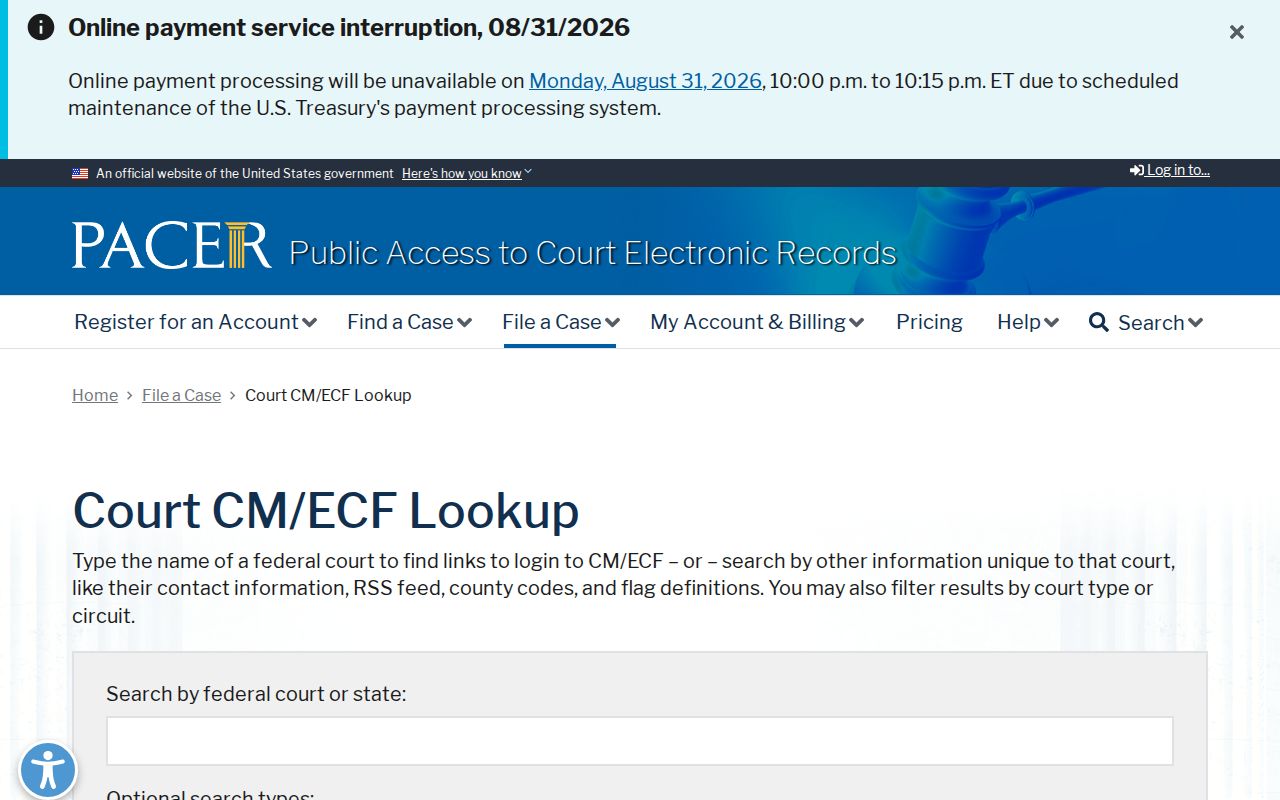
Keeping state and federal systems separate helps a reader choose the right Orange County court docket from the start.
Map and Directions to the Orange County Courthouse
Superior Court and District Court files for the whole county are kept by the Clerk of Superior Court at the Orange County Courthouse/Justice Center, 106 E. Margaret Lane, in Hillsborough, the county seat. Orange County also holds sessions at the Chapel Hill Courthouse, 179 E. Franklin Street, but the Hillsborough building is the Clerk's primary counter for a case file, copy, or cashier payment.
Orange County Courthouse / Justice Center
106 E. Margaret Lane
Hillsborough, NC 27278
919-644-4500
Monday through Friday, 8:30 a.m. to 5:00 p.m.
Chapel Hill Courthouse
179 E. Franklin Street
Chapel Hill, NC 27514
919-644-4500
Monday through Friday, 8:30 a.m. to 5:00 p.m.
The Hillsborough courthouse posts free three-hour parking on East Margaret Lane and a direct entry rule: bags and purses are not allowed inside. No other screening, locker, or accessibility procedure is published, so calling 919-644-4500 ahead of a visit is the safer plan.